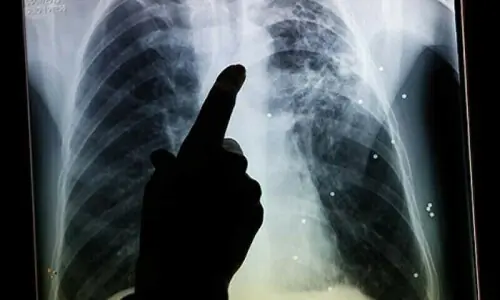
QUETTA: Tuberculosis (TB) cases are on the increase in Balochistan and especially its prisons as during the current year, 16,000 to 18,000 cases were reported across the province.
‘The Provincial Manager of the TB Control Programme, Balochistan, Dr Sher Afghan Raisani, disclosed this at a press conference here on Tuesday. He was accompanied by Superintendent of Quetta district jail SSP Hamidullah Pechi, Project Manager of TB Control Programme Dr Irfan and other health experts.
Dr Raisani said that comprehensive screening of communicable and non-communicable diseases was conducted among 3,000 prisoners in 12 prisons of Balochistan.
He said that through the TB programme, free diagnosis and treatment of TB patients continue at 250 centers across the province. In addition, in 20 districts, 650 doctors in both government and private hospitals are ensuring TB diagnosis and treatment. More than 100 modern FM microscopes and 30 AI-based digital X-ray machines have been provided across the province to modernise TB screening in hospitals, he said. Treatment centres for drug-resistant TB have also increased from three to eleven in the province.
During the current year, 16,000 to 18,000
cases were reported across the province
Dr Raisani said that for the first time, the Department of Health of Balochistan, TB Control Programme, Department of Prisons and DoPasi Foundation have launched a coordinated health screening programme in all 12 prisons of the province.
He said the initiative is aimed at providing prisoners, prison staff, and related security forces with standard diagnosis and treatment for both communicable and non-communicable diseases.
During September this year, a one-month screening campaign covered a total of 2,930 individuals, including 2,558 prisoners and 371 prison staff. The screening covered TB, HIV, Hepatitis B and C, high blood pressure, diabetes, obesity, mental health, nutrition, and lifestyle risk factors. Advanced AI-activated digital X-ray technology was used for TB screening, and 139 individuals showed suspicious results. Following further testing with GeneXpert, 11 TB cases were confirmed. All cases were found to be drug-sensitive, and patients were immediately linked to treatment, he said.
The HIV screening identified eight positive cases, while Hepatitis B was detected in 61 individuals and Hepatitis C in 93. Although female prisoners represented only 2.6 per cent of the total prison population, they had a relatively higher rate of hepatitis.